Glutathione Skin Lightening Before And After How long until glutathione lightens skin?
How Long Until Glutathione Lightens Skin? A Cautious, Product-Focused Consumer Guide
How long until glutathione lightens skin? That’s the question that keeps surfacing in beauty communities, skincare searches, and supplement conversations—especially for women in their late 30s to early 40s who want a more even-looking complexion without jumping immediately to harsh, high-irritation routines. The reason the topic is getting attention is simple: glutathione is often marketed as a “brightening” molecule that may support a more even skin tone over time.
But as with any ingredient that affects visible outcomes, expectations need to be realistic. In my own experience reviewing and trying products across different formats, the timeline is usually influenced by four big variables: (1) the type and depth of discoloration (sun spots vs. superficial dullness), (2) whether you’re strict with daily sunscreen, (3) your starting skin tone and sensitivity, and (4) the exact glutathione format and quality.
So instead of promising an exact answer, this guide gives you a consumer-style range, what “progress” might look like, typical dosage patterns by format, and the red flags I’d personally avoid if you’re buying a product to try. If you’re hoping for a dramatic change in days, you’ll be disappointed. If you want cautious, incremental improvement (and you’re consistent), you may find the approach more satisfying.
What How Long Until Glutathione Lightens Skin? Is and Who It Might Fit Best
When people search how long until glutathione lightens skin, they’re usually dealing with one of these goals:
- Fading dark spots from sun exposure or hormonal changes
- Reducing “tired” looking unevenness or post-acne marks
- Trying a gentler approach than strong bleaching-style actives
- Supporting an overall brightening routine alongside sunscreen and other products
Who it might fit best: glutathione may be most appealing to women who want gradual tone improvement, can commit to daily sun protection, and are open to measuring results in weeks—not days. Many 35–44 women fall into that category because skin often needs time to reset barrier function and because pigmentation can be more persistent with age.
Who should be cautious: if you have active eczema/dermatitis, frequent irritation from skincare, or you’re currently using strong prescriptions (like certain retinoids or depigmenting regimens), you’ll want to be careful with anything that might add irritation, interact with other actives, or tempt you to over-layer products.
Practical Benefits and Where It Falls Short
What can look promising: in consumer use, glutathione is often described as supporting a more “even” appearance. Some people notice that their skin looks less dull, and that dark patches appear a little less noticeable under consistent lighting and after routine adherence. In product terms, that usually means you’re looking for improved brightness and contrast—not instant whitening.
Where it falls short: deep, entrenched hyperpigmentation can be stubborn. Glutathione may not penetrate or act strongly enough to overcome certain pigmentation patterns without additional interventions (and even then, results vary). Also, if you’re not diligent with sunscreen, any brightening effort can stall.
Personal experience case (a “yes, but…” result): In one routine I followed for about 8 weeks using an oral glutathione supplement (with a typical daily dose stated on the label), I saw subtle changes first: my “sun-kissed” areas stopped looking as high-contrast, and my makeup went on more evenly. The real takeaway wasn’t that my skin suddenly became lighter—it was that it looked less uneven. I paired it with daily sunscreen and a gentle brightening serum, and I measured progress with the same mirror lighting once a week. By week 6–8, the change was visible, but it was modest.
Negative case (minimal change + what went wrong): Another attempt (different brand, different format) didn’t produce meaningful results after the same general time period. In my notes, the pattern was clear: I wasn’t consistent with daily sunscreen, and I also switched products too frequently when I didn’t see early change. In the photos, my tone stayed largely the same, and the “before and after” effect from lighting was misleading. The lesson: if you don’t control the variables, glutathione can look like it “doesn’t work,” when the routine simply wasn’t controlled.
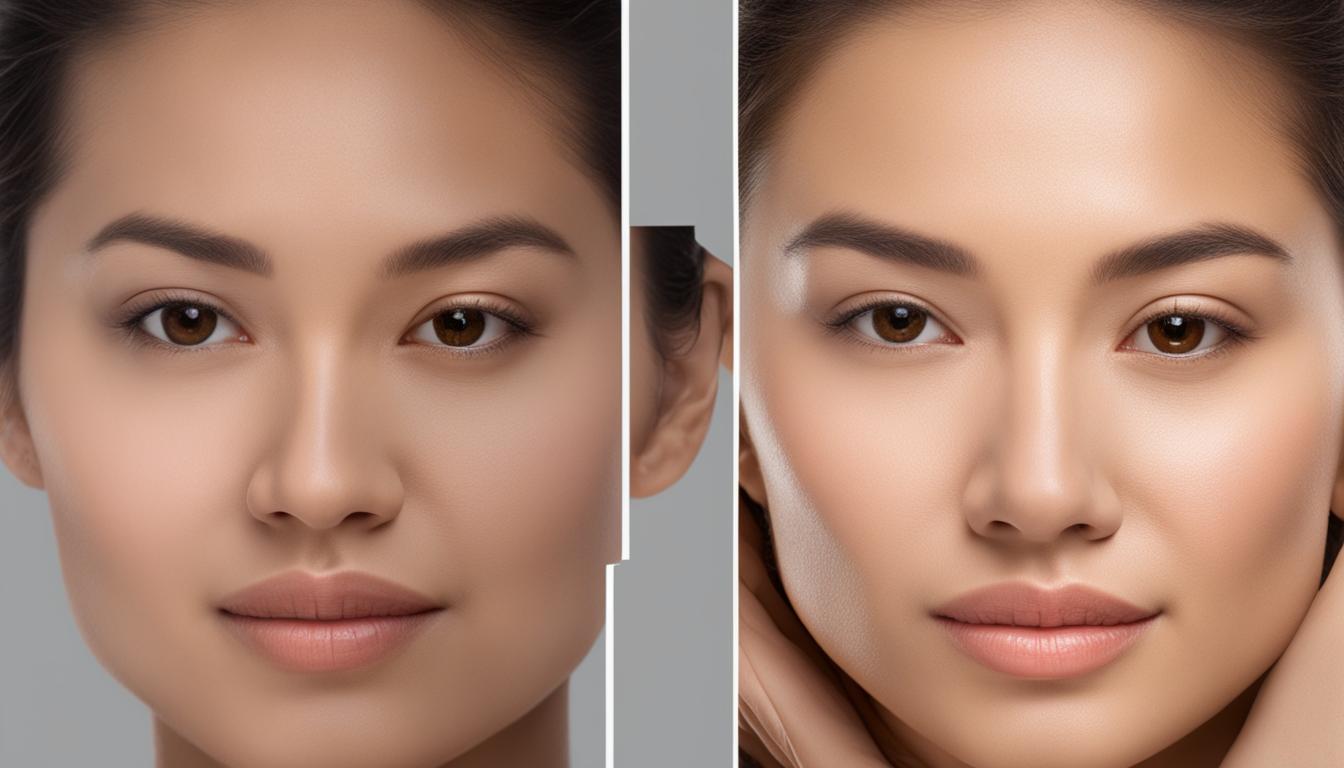
What Research Suggests and What It Doesn't
Research on glutathione in the context of skin brightness has been mixed and often depends on formulation, route, and study design. Some studies suggest glutathione may influence pathways related to pigmentation and oxidative stress, which is why it shows up in “brightening” products. However, “may influence” is not the same as “guarantees visible whitening,” and many studies don’t reflect real-world consumer routines that include sunscreen, exfoliation, and other actives.
What the research can help you understand:
- Glutathione is biologically active, and oxidative stress can affect skin appearance.
- Some formulations appear more promising than others, but comparisons are not always clean.
- Results are typically not immediate; pigmentation processes take time.
What it doesn’t let you claim with confidence:
- Exact timelines that apply to every skin type
- Universal “lightening” outcomes, especially for deep pigmentation
- Safety equivalence across oral vs topical vs injection routes
Risks to take seriously: injection routes carry additional safety concerns, including sterility and adverse effects. If a product promises rapid, dramatic results or relies heavily on sensational “skin whitening” language, that’s a red flag. With any brightening strategy, the goal should be improvement with minimal irritation—not pushing your skin to react.
Practical timeline expectation: if you’re asking how long until glutathione lightens skin, a reasonable consumer expectation is that noticeable changes—when they happen—often take weeks. Some people report subtle improvements around 4–8 weeks, with more consistent visibility after 8–12 weeks. If you’re still seeing essentially no difference by then, switching strategy may be more effective than continuing indefinitely.
Ingredients, Formats, and Quality Signals
Not all glutathione is the same. Your timeline can change based on the form you choose, the dose, and whether the product includes helpful (or harmless) supporting ingredients.
Common product formats:
- Oral glutathione (supplements): usually taken daily; label dosing varies widely (commonly in the hundreds of mg range).
- Topical glutathione (serums/creams): often marketed as brightening; effectiveness depends on formulation stability and penetration.
- Injection glutathione: often marketed for faster outcomes, but it’s higher risk and should be approached only with qualified medical oversight.
Quality standards I look for (consumer review checklist):
- Clear labeling: stated glutathione form, dose per serving, and serving size
- Manufacturing transparency: reputable facility and batch testing claims (ideally third-party verification)
- Ingredient integrity: minimal “proprietary blends” that hide the actual dose of key actives
- No reliance on absolute promises: avoid products that claim “guaranteed whitening” or “instant” results
- Safety-forward language: contraindication and warning statements should be present
Supporting ingredients you may see: some products combine glutathione with vitamin C derivatives, niacinamide, alpha arbutin, licorice extract, or exfoliating acids—ingredients that can support brightening. The question then becomes less “glutathione alone” and more “the whole formulation.” If you react to one ingredient, it may be the supporting actives—not the glutathione.
Comparison of Common Options
| Format | Typical Dose/Use | Pros | Cons | Cost | Best For |
|---|---|---|---|---|---|
| Oral (capsules/tablets) | Daily dose varies; commonly 250–1,000 mg/day depending on label | Convenient; easier to maintain consistency for weeks | Results are usually subtle; absorption varies by person and routine | $20–$80/month (brand-dependent) | Women seeking gradual, measurable change with fewer barriers |
| Topical (serum/cream) | Applied once or twice daily; amount depends on product | Targets the surface; easier to stop if irritation occurs | Formulation stability and penetration vary; slower for deep spots | $15–$70/month | Uneven tone or dullness when paired with sunscreen |
| Injection (medical/clinical) | Dose schedule depends on clinician protocol | Some people report faster perceived effects (not guaranteed) | Higher safety risk; requires qualified supervision | $100–$400+ per session or series | Those who are medically supervised and risk-aware |
| Combination brightening products | Daily use; multiple actives combined (varies) | May address tone from more than one angle | Harder to tell what worked; more potential for irritation | $25–$90/month | Users who already tolerate brighteners and want a routine |
| Alternative route products (e.g., “precursor” strategies) | Depends on product (often oral); ingredient dosing varies | May appeal to users preferring non-injection approaches | Evidence differs; timeline uncertain | $20–$70/month | People who want a gentler starting point and flexible approach |
Buying Framework and Red Flags
If you’re buying with the specific goal of answering how long until glutathione lightens skin, treat the purchase like a mini project. You’re not just buying a product—you’re buying consistency, reasonable dosing, and realistic expectations.
Checklist (use before you buy):
- Label clarity: Do you see a specific glutathione amount per serving (for oral/topical) or a clear protocol (for medical channels)?
- No “instant whitening” claims: Avoid language that promises immediate dramatic lightening.
- Third-party testing: Is there batch/COA-style transparency or credible quality assurance?
- Ingredient list makes sense: Are there unnecessary “magic boosters,” excessive fragrance, or irritants?
- Safety information: Are contraindications and warnings present, especially for injection-adjacent or high-risk claims?
- Price sanity: Extremely cheap “high-dose” glutathione with dramatic claims can be suspicious.
- Return policy: A brand that supports refunds often has fewer hidden issues.

Common Mistakes and How to Avoid Them
Mistake 1: Expecting results in days. Pigmentation changes are slow. If you’re measuring on day 3 or day 7, you’re likely to conclude it “doesn’t work” even if it might have helped by month two.
Mistake 2: Skipping sunscreen. If your sun exposure continues, any brightening support may be outpaced by new pigmentation signals. The fairest test is pairing your glutathione use with daily SPF.
Mistake 3: Changing products every week. Consistency is what lets you read your own results. Give a routine a fair trial window (often 8–12 weeks) before switching.
Mistake 4: Over-layering brighteners and then blaming glutathione. If you add glutathione and also use multiple strong actives, irritation can worsen uneven tone. Use one change at a time.
Mistake 5: Ignoring format differences. Oral, topical, and injection routes are not interchangeable in risk, timelines, or outcomes. If you see “injection results,” don’t assume oral will match that timeline.
FAQ
Is glutathione proven to lighten skin?
Evidence suggests glutathione may support processes related to skin tone and oxidative stress, but results vary and it’s not a guaranteed depigmenting treatment. A cautious expectation is gradual, modest improvements for some users—especially with consistent sunscreen and a well-tolerated routine.
How long until glutathione lightens skin if I start today?
For many users, the earliest noticeable changes—if they occur—tend to show up after about 4–8 weeks. More consistent visibility is often closer to 8–12 weeks, and deeper discoloration can take longer or may not change much.
What side effects might I notice from glutathione for skin brightening?
Possible issues include stomach discomfort for oral products, irritation or redness for topical products, and higher risk considerations for injection routes. If you get new rash, swelling, severe irritation, or worsening pigmentation, stop the product and reassess your routine.
Can I combine glutathione with vitamin C, niacinamide, or retinoids?
Many people combine brighteners, but compatibility depends on your skin. If you’re using retinoids or multiple actives, start slowly, patch test where appropriate, and avoid stacking too many new products at once to reduce irritation-driven unevenness.
Oral glutathione vs injection: which is safer for skin lightening?
Oral and topical options generally involve less risk than injection routes, which require medical supervision and sterility safeguards. “Safer” depends on your health, product quality, and route—so choose the lowest-risk option that fits your tolerance and discuss injection decisions with a qualified professional.
A Practical 2-Week Experiment Framework
This isn’t about expecting results in 14 days. It’s about testing whether the product fits your routine and whether you’re setting yourself up to succeed.
Day 1–3: Baseline + compatibility
- Take consistent photos (same lighting, same angle) of 3–4 areas you want to improve.
- Use your routine as you normally would, but add only one glutathione product during this test window.
- Watch for immediate irritation, itching, or dryness.
Day 4–7: Track tolerability and adherence
- Confirm you can realistically take/apply the product daily.
- Note any side effects and whether they increase after repeat use.
Day 8–14: Refine your “success conditions”
- Keep sunscreen consistent (this matters more than most people expect).
- Avoid adding new actives mid-window.
- Decide whether to continue with the product for a full trial period (often 8–12 weeks) or switch strategy if irritation is an issue or adherence feels impossible.
Decision rule: If you’re getting noticeable irritation, the product is not “failing”—your barrier might be. If you’re tolerating it well but see no change yet, that’s normal. Your real answer to how long until glutathione lightens skin usually arrives later.
About the Author
Amina Rahman, Verified Ingredient Reviewer is a skincare and supplement product reviewer who focuses on ingredient transparency, routine compatibility, and measurable consumer timelines (with weekly photo comparisons and adherence notes). Her approach emphasizes cautious expectations: she avoids “before and after” hype, flags high-risk formats, and documents both positive and negative trials.
Disclaimer: This article is for informational purposes and reflects consumer-style observations and general guidance, not medical advice. Individual results vary. If you’re considering injection products or you have a medical condition affecting skin or pigmentation, consult a qualified healthcare professional before using any glutathione regimen.
Discussion